【力扣567】字符串的排列
题目
给你两个字符串 s1 和 s2 ,写一个函数来判断 s2 是否包含 s1 的 排列。如果是,返回 true ;否则,返回 false 。
换句话说,s1 的排列之一是 s2 的 子串 。
示例 1:
1 | 输入:s1 = "ab" s2 = "eidbaooo" |
示例 2:
1 | 输入:s1= "ab" s2 = "eidboaoo" |
提示:
1 <= s1.length, s2.length <= 104s1和s2仅包含小写字母
实现代码
和
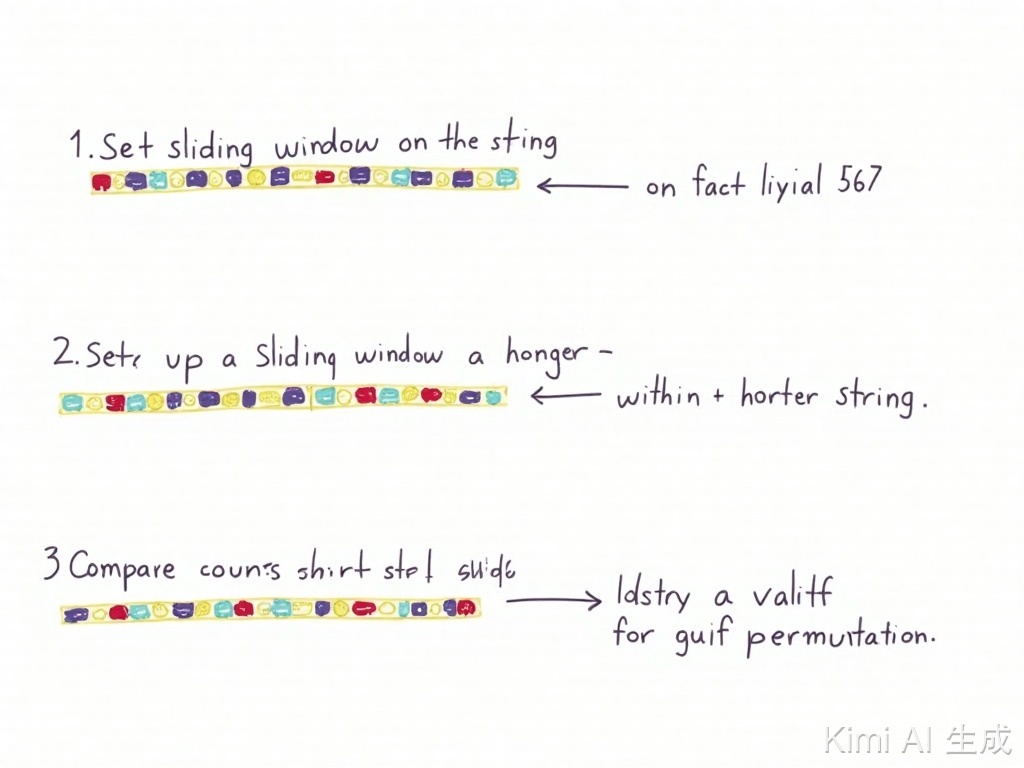
【力扣76】最小覆盖字串思路一样,使用双指针的滑动窗口来实现
1 | class Solution { |
代码讲解
代码一
1 | // 维护字符出现的次数 |
和【力扣76】最小覆盖字串这道题思路不同的是这里通过两个数组维护字符串出现的次数;
为什么?
题目规定s1 和 s2 仅包含小写字母,也就是说最多26个字母,因为每个字母对应的ASCLL码都是有序的,比如a的ASCLL码是97,b是98,c是99……,如果将对应的字母减去a的ASCLL码值,就是数组对应的角下标,所以字符出现的次数就能维护在对应字母的数组角下标位置;
代码二
1 | if ((right - left) == s1Len) { |
这里将while改为了if,因为窗口大小是固定的,执行left++之后循环就会退出来,也就是内部代码只能跑一次就会出来;
时间复杂度
最差的情况是left扫了一遍s2,right扫了一遍s2,那就是2*s,加上s1、s2所有字符集,最大26,去除常数最终的时间复杂度是O(N)
空间复杂度
额外空间left、right和两个数组,left和right的空间复杂度是O(1)可以不计,因为数组是存放字符次数的,大小取决于s1和s2不同字符的个数,最大也就26,所以去除常数的空间复杂度为O(1)
本博客所有文章除特别声明外,均采用 CC BY-NC-SA 4.0 许可协议。转载请注明来源 青柠!
相关推荐
2025-09-13
【力扣167】两数之和II-输入有序数组
题目给你一个下标从 1 开始的整数数组 numbers ,该数组已按 非递减顺序排列 ,请你从数组中找出满足相加之和等于目标数 target 的两个数。如果设这两个数分别是 numbers[index1] 和 numbers[index2] ,则 1 <= index1 < index2 <= numbers.length 。 以长度为 2 的整数数组 [index1, index2] 的形式返回这两个整数的下标 index1 和 index2。 你可以假设每个输入 只对应唯一的答案 ,而且你 不可以 重复使用相同的元素。 你所设计的解决方案必须只使用常量级的额外空间。 示例 1: 123输入:numbers = [2,7,11,15], target = 9输出:[1,2]解释:2 与 7 之和等于目标数 9 。因此 index1 = 1, index2 = 2 。返回 [1, 2] 。 示例 2: 123输入:numbers = [2,3,4], target = 6输出:[1,3]解释:2 与 4 之和等于目标数 6 。因此 index1 = 1, in...
2025-09-17
【力扣3】无重复字符的最长子串
题目给定一个字符串 s ,请你找出其中不含有重复字符的 最长 子串 的长度。 示例 1: 123输入: s = "abcabcbb"输出: 3 解释: 因为无重复字符的最长子串是 "abc",所以其长度为 3。 示例 2: 123输入: s = "bbbbb"输出: 1解释: 因为无重复字符的最长子串是 "b",所以其长度为 1。 示例 3: 1234输入: s = "pwwkew"输出: 3解释: 因为无重复字符的最长子串是 "wke",所以其长度为 3。 请注意,你的答案必须是 子串 的长度,"pwke" 是一个子序列,不是子串。 提示: 0 <= s.length <= 5 * 104 s 由英文字母、数字、符号和空格组成 实现代码 和【力扣76】最小覆盖字串思路一样,使用双指针的滑动窗口来实现 12345678910111213141516171819class Solution { pub...
2025-09-17
【力扣438】找到字符串中所有字母异位词
题目给定两个字符串 s 和 p,找到 s 中所有 p 的 异位词 的子串,返回这些子串的起始索引。不考虑答案输出的顺序。 示例 1: 12345输入: s = "cbaebabacd", p = "abc"输出: [0,6]解释:起始索引等于 0 的子串是 "cba", 它是 "abc" 的异位词。起始索引等于 6 的子串是 "bac", 它是 "abc" 的异位词。 示例 2: 123456输入: s = "abab", p = "ab"输出: [0,1,2]解释:起始索引等于 0 的子串是 "ab", 它是 "ab" 的异位词。起始索引等于 1 的子串是 "ba", 它是 "ab" 的异位词。起始索引等于 2 的子串是 "ab", 它是 "ab" 的异位词。 提示: 1 <= s.len...
2025-09-16
【力扣76】最小覆盖子串
题目给你一个字符串 s 、一个字符串 t 。返回 s 中涵盖 t 所有字符的最小子串。如果 s 中不存在涵盖 t 所有字符的子串,则返回空字符串 "" 。 注意: 对于 t 中重复字符,我们寻找的子字符串中该字符数量必须不少于 t 中该字符数量。 如果 s 中存在这样的子串,我们保证它是唯一的答案。 示例 1: 123输入:s = "ADOBECODEBANC", t = "ABC"输出:"BANC"解释:最小覆盖子串 "BANC" 包含来自字符串 t 的 'A'、'B' 和 'C'。 示例 2: 123输入:s = "a", t = "a"输出:"a"解释:整个字符串 s 是最小覆盖子串。 示例 3: 1234输入: s = "a", t = "aa"输出: ""解释: t 中两个字符 ...
2025-09-13
【力扣142】环形链表
题目给定一个链表的头节点 head ,返回链表开始入环的第一个节点。 如果链表无环,则返回 null。 如果链表中有某个节点,可以通过连续跟踪 next 指针再次到达,则链表中存在环。 为了表示给定链表中的环,评测系统内部使用整数 pos 来表示链表尾连接到链表中的位置(索引从 0 开始)。如果 pos 是 -1,则在该链表中没有环。注意:pos 不作为参数进行传递,仅仅是为了标识链表的实际情况。 不允许修改 链表。 示例 1: 123输入:head = [3,2,0,-4], pos = 1输出:返回索引为 1 的链表节点解释:链表中有一个环,其尾部连接到第二个节点。 示例 2: 123输入:head = [1,2], pos = 0输出:返回索引为 0 的链表节点解释:链表中有一个环,其尾部连接到第一个节点。 示例 3: 123输入:head = [1], pos = -1输出:返回 null解释:链表中没有环。 提示: 链表中节点的数目范围在范围 [0, 104] 内 -105 <= Node.val <= 105 pos 的值为 -1 或者...
2025-09-13
【力扣160】相交链表
题目给你两个单链表的头节点 headA 和 headB ,请你找出并返回两个单链表相交的起始节点。如果两个链表不存在相交节点,返回 null 。 图示两个链表在节点 c1 开始相交: 题目数据 保证 整个链式结构中不存在环。 注意,函数返回结果后,链表必须 保持其原始结构 。 自定义评测: 评测系统 的输入如下(你设计的程序 不适用 此输入): intersectVal - 相交的起始节点的值。如果不存在相交节点,这一值为 0 listA - 第一个链表 listB - 第二个链表 skipA - 在 listA 中(从头节点开始)跳到交叉节点的节点数 skipB - 在 listB 中(从头节点开始)跳到交叉节点的节点数 评测系统将根据这些输入创建链式数据结构,并将两个头节点 headA 和 headB 传递给你的程序。如果程序能够正确返回相交节点,那么你的解决方案将被 视作正确答案 。 示例 1: 123456输入:intersectVal = 8, listA = [4,1,8,4,5], listB = [5,6,1,8,4,5], skipA = 2, skip...
评论
系列文章